
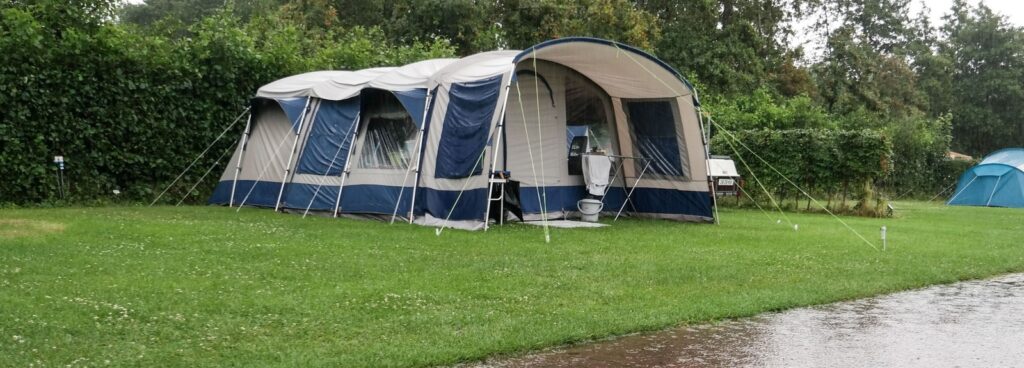
- Choosing where to camp: Set your tent up away from drips, wind, and hazards.
- Keeping your tent dry: Use plastic bins, dry bags, and tarpaulins to keep you, your tent, and your possessions dry.
- What should you wear?: Wear synthetic or merino, with a breathable rain jacket, and avoid cotton.
- What should we do in the rain?: You can hike, visit the beach and the town, play cards in the tent and take part in campsite activities with more space to yourself.
- How much rain is too much rain?: Though you can camp in the rain, avoid actual storms.
Camping in the rain is doable. After all, tents are waterproof, aren’t they? And when the rain starts to fall, so do campsite prices! Even the most crowded, unbookable campsites may suddenly have an opening for you. Still, you need careful planning to stay as dry and comfortable as possible.
Choosing where to camp
Now that most of the other tent campers have cancelled their bookings due to the rain, you have ample choice in where to set up your tent!
Choose a spot with elevated ground rather than a low area or hollow. Water can easily pool in these areas.
Another thing to consider is avoiding setting your tent up directly under heavy tree branches. In the rain, these branches will drip continuously, and possibly even break and drop on your tent or campervan during strong gusts of wind!
Lastly, position your tent door facing away from the wind. This will keep rain out when you’re entering the tent or coming back from an amazing hike.
Keeping your tent dry
One great way to keep the base of your tent dry is to place a ground footprint underneath. You can use a ground tarpaulin for this. Cut it slightly smaller than your tent floor, and it won’t trap rainwater underneath.
Keep all your gear and sleeping bags away from your tent’s interior walls. If nothing touches the fabric, nothing will break the surface tension, and so no water will seep in. For maximum rain protection, you can also put a tarp over your entire camping area as a kind of shield. Use adjustable poles and fully solid stakes so that your tarp stays firmly in the ground in any wind.
To keep your clothes and electronics safe, you can use heavy-duty plastic bins and dry bags, like the ones designed for swimming. In hazardous weather, you need your phone fully charged and working to stay on top of messages, news, and updates. It’s also a good idea to keep your wet shoes in a rubbish bag by the door. This way, you don’t have to bring those wet things inside the tent.
Though you don’t want to let the rain in, try keeping the tent vent or zip slightly open to reduce interior condensation.
What should you wear?
Every seasoned nature explorer knows synthetic or merino wool fibres work best for base layers or underwear. Whatever you do, avoid cotton at all costs, since the material holds moisture and makes you colder.
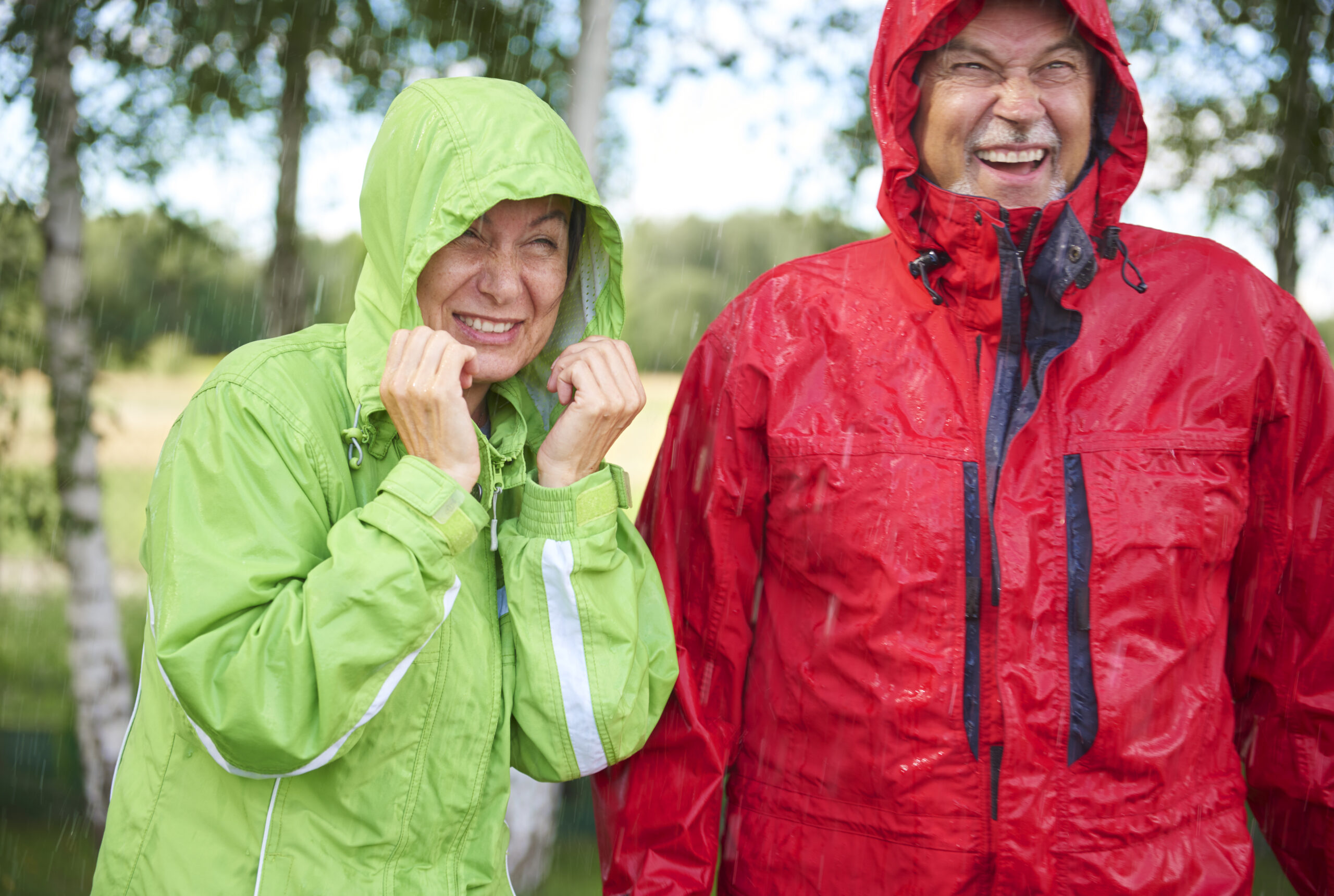
A decent, breathable rain jacket or coat is key for camping in the rain, as are rain trousers or frog togs. Your rain clothes don’t have to be pricey - you could even just wear typical waterproof tracksuit joggers - but you do need something a little better than just “showerproof” fabric.
Your footwear will also need to be waterproof. Waterproof boots are best. This way, you can even enjoy splashing in those puddles and mud. But you’ll most likely still need extra dry socks to change into inside your sleeping area.
What should we do in the rain?
Rain needn’t ruin your camping trip, far from it. There’s nothing like some peaceful rest in a campsite with plenty of space all to yourself, followed by a lovely hike through buzzing, vibrant forest, dramatic skies, and other interesting, phenomenal habitats. You can enjoy the beach with a little more room to play, and some fierce waves. Stargazing might be a little difficult at night, but you can enjoy endless games of cards by the campfire or lantern’s glow, under the canopy of your tarp or tent. You can also still enjoy the nearby shops, cafés, restaurants, and other local attractions and sights, but with more peace to linger or search for the best finds. And, of course, your campsite will most likely have loads of fun indoor games, activities, and movies to watch.
How much rain is too much rain?
Now you know that if you look at the weather and see a little summer rain coming up in the forecast, there’s no need to pack your bags and head home. The key to camping in the rain is being prepared and knowing what to do. Puddles don’t have to mean trouble when you have your boots with you.
There is one situation in which you genuinely should bail out: a thunderstorm. If an actual thunderstorm rolls in and blows all your best-laid plans away, things can get dangerous pretty quickly. The campsite may give you some advice, so be prepared to leave should they inform you of any dangers.
Now that you know what to expect from Australia’s sometimes not-so-sunny climate, find your local holiday park here and head out on your own fun Australian camping adventure, whatever the weather throws at you!
Now that you know everything you need to plan your New South Wales road trip, find your NSW holiday parks here and head out on your sun-drenched camping adventure!